Supporting Your Child with Anxiety
Children experience anxiety in many different ways
whether that be through excessive worry or fear, forgetfulness, irritability, anger and frustration, nervousness, or a need for reassurance throughout the day. Your child may experience changes in sleep patterns or eating habits, difficulty with transitions, or have a hard time attending school and participating in other activities. Sometimes children may struggle making decisions or expressing what they want. They may even experience physical symptoms, often stomach aches or headaches. Children can develop anxiety after experience a distressing or traumatic event, after witnessing arguments and conflict at home or with friends, changes in family structure or home, or navigating learning differences and academic pressures.
While we may want to do everything we can to protect our children and take away their fears, they best thing we can do is provide them with the proper skills, reassurance, and strategies to confront their fears and show them that they can tolerate anxiety. We want to show up in a way that reminds them that they are okay, loved, and supported. Rather than telling your child there is nothing to worry about, practice validating their feelings and creating a space for fears when they arise. We can also work on staying regulated ourselves so that our children learn to co-regulate their emotions alongside us, and develop skills to feel safe and calm in their bodies.
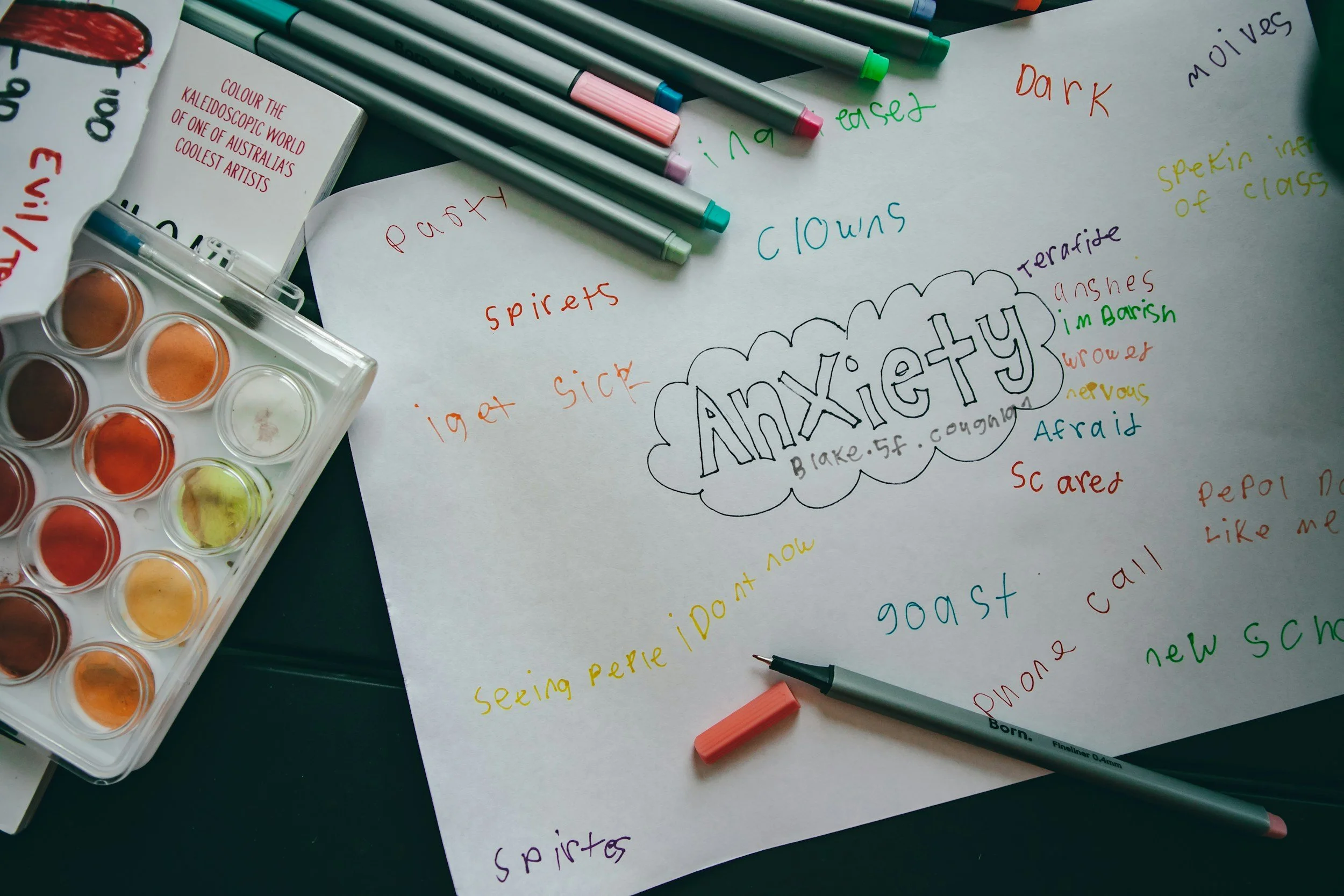
Here are some creative offerings to supporting your child with anxiety- or with any big feelings!
1. Create a character for the anxiety. Maybe use a puppet, a stuffed animal, or invite your child to draw an image of their anxiety. Then, name the anxiety and have your child speak with the “anxiety.” Through externalizing a child’s feelings, a child may recognize that their anxiety is separate from them, and that they can interact, play, and dialogue with their anxiety so they understand it better and feel a sense of control. Next time your child has an anxious thought or feeling, your child can call on this character to talk to it.
2. Create a “Worry” jar. If your child has late night fears and worries, your child can write down the worries and put them into a jar. This may help contain the fears and worries, bring them out of your child’s mind, and let them know the worries are contained in the jar and they don’t have to carry them around
3. Create a “peaceful” place your child can go to when feeling overwhelmed or dysregulated. Maybe this place is full of soft blankets or sensory objects and toys to play with. Music and art materials may be in this peaceful place. Rather then sending a child to their room or putting them in a “time out,” invite your child to find their peaceful place when they are having a big feeling. When they are anxious or emotionally dysregulated they have a place to go to help them. You are encouraged to join your child if you can in their peaceful place!
4. Try some movement! Maybe your child needs to run, shake, dance, or move their bodies to let go of the anxiety. Have you ever seen an animal shake when it is scared or just experienced a traumatic event? This technique helps us humans too!
5. Validate, stay present and connected to your child as best you can. When we tell our child to calm down or stop worrying, we are asking them to do a task they may not know how to be able to do when they are having a big feeling. Always validate your child’s feelings first, stay connected by letting them know you see them and hear them, and even share your own strategies for managing your anxiety and fears.
And of course, you may decide to bring your child to therapy. As a child therapist, I work both with the child and parent to build tools and skills to address worries and anxious thoughts through play, creative expressive and talk therapy. Sometimes a child needs a space separate from their home to talk to someone that is not a parent or teacher, who will see, support, and guide them through communicating and expressing their big feelings to ease anxiety, fear, and stress. Please reach out with any questions or if interested in getting started and I’d be happy to share more about working together.
